Discover the Groundbreaking Research
Execution Discipline as a Structural Layer
NGIS/IDT introduces a deterministic execution discipline designed for synchronized and AI-driven infrastructures.
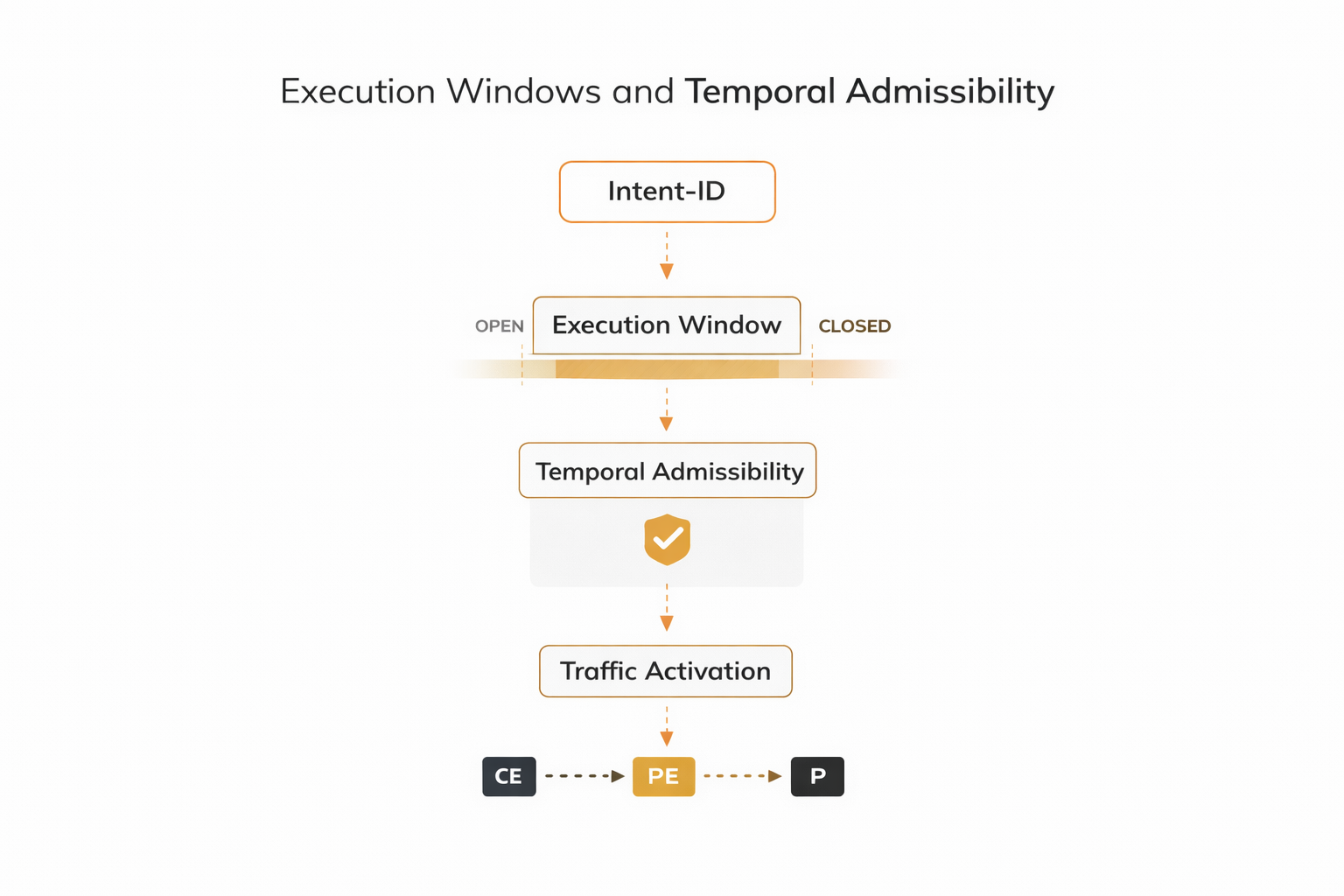
Instead of reacting to congestion after activation, the framework verifies admissibility before traffic enters the forwarding domain.
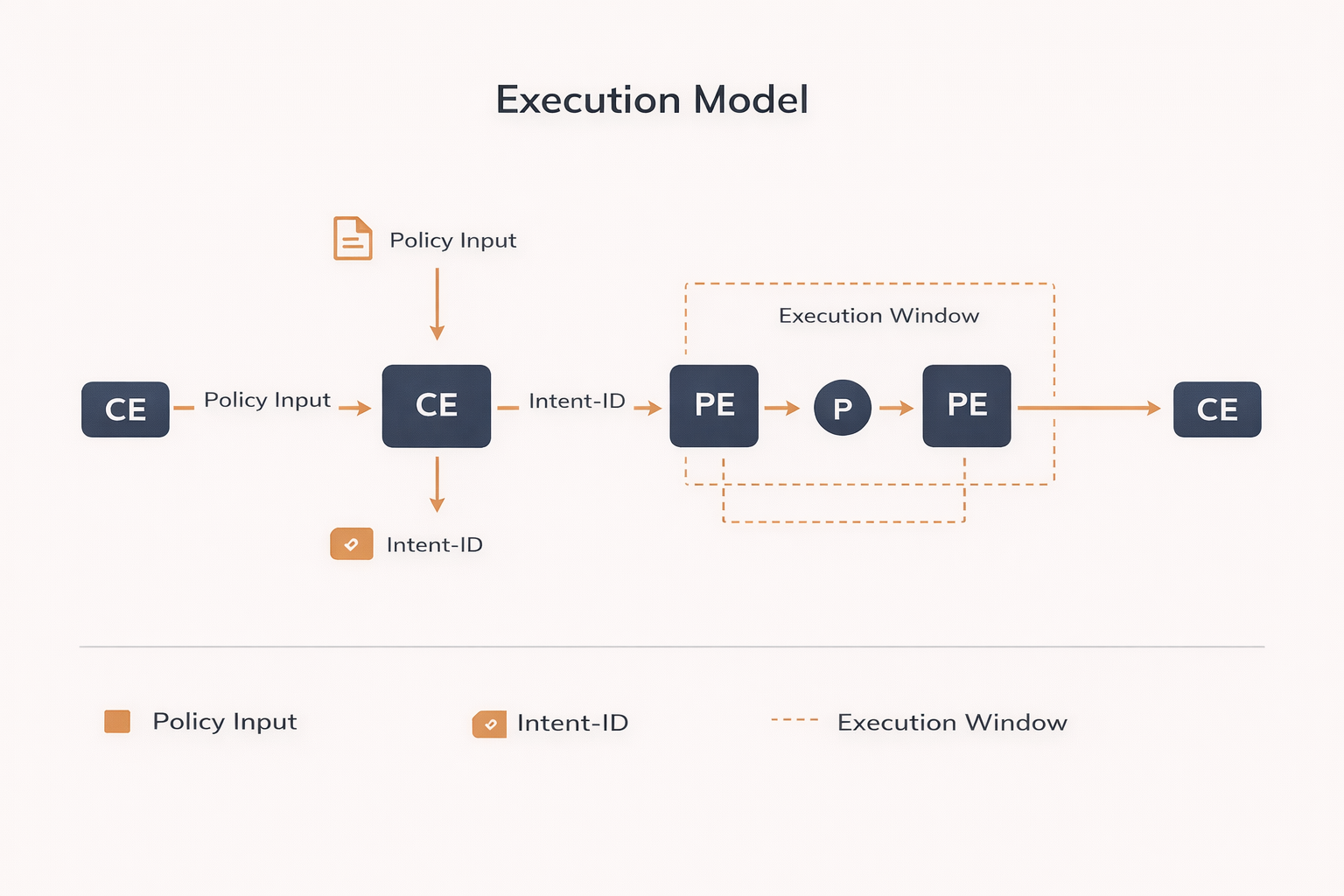
Semantic routing with Intent-ID
Intent-ID formalizes execution conditions at ingress, enabling deterministic execution admissibility before activation.
Exploring IDT and Intent-ID
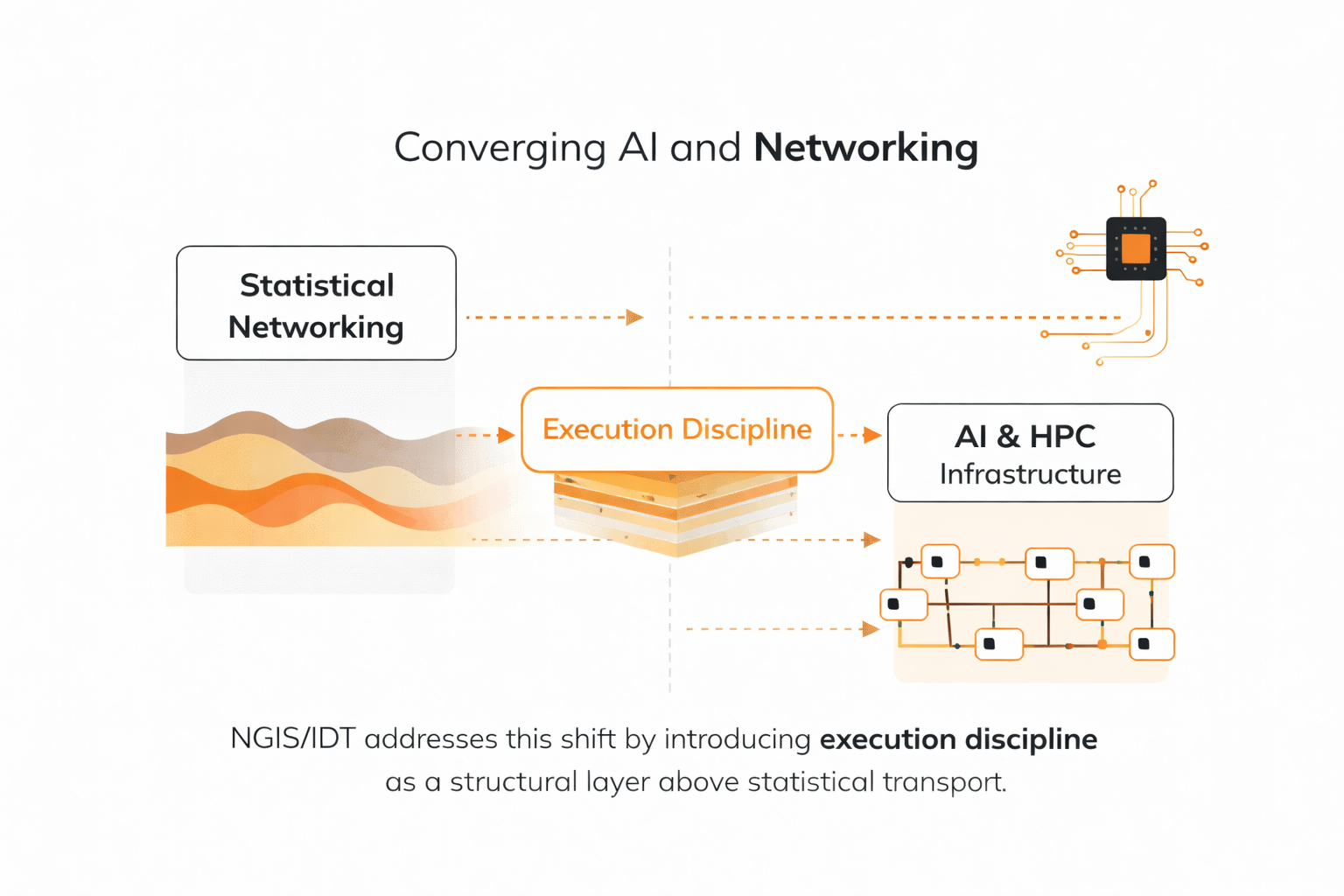
AI industrialization transforms transport from statistical substrate into execution infrastructure.
Converging AI and Networking
NGIS/IDT addresses this shift by introducing execution discipline as a structural layer above statistical transport models.
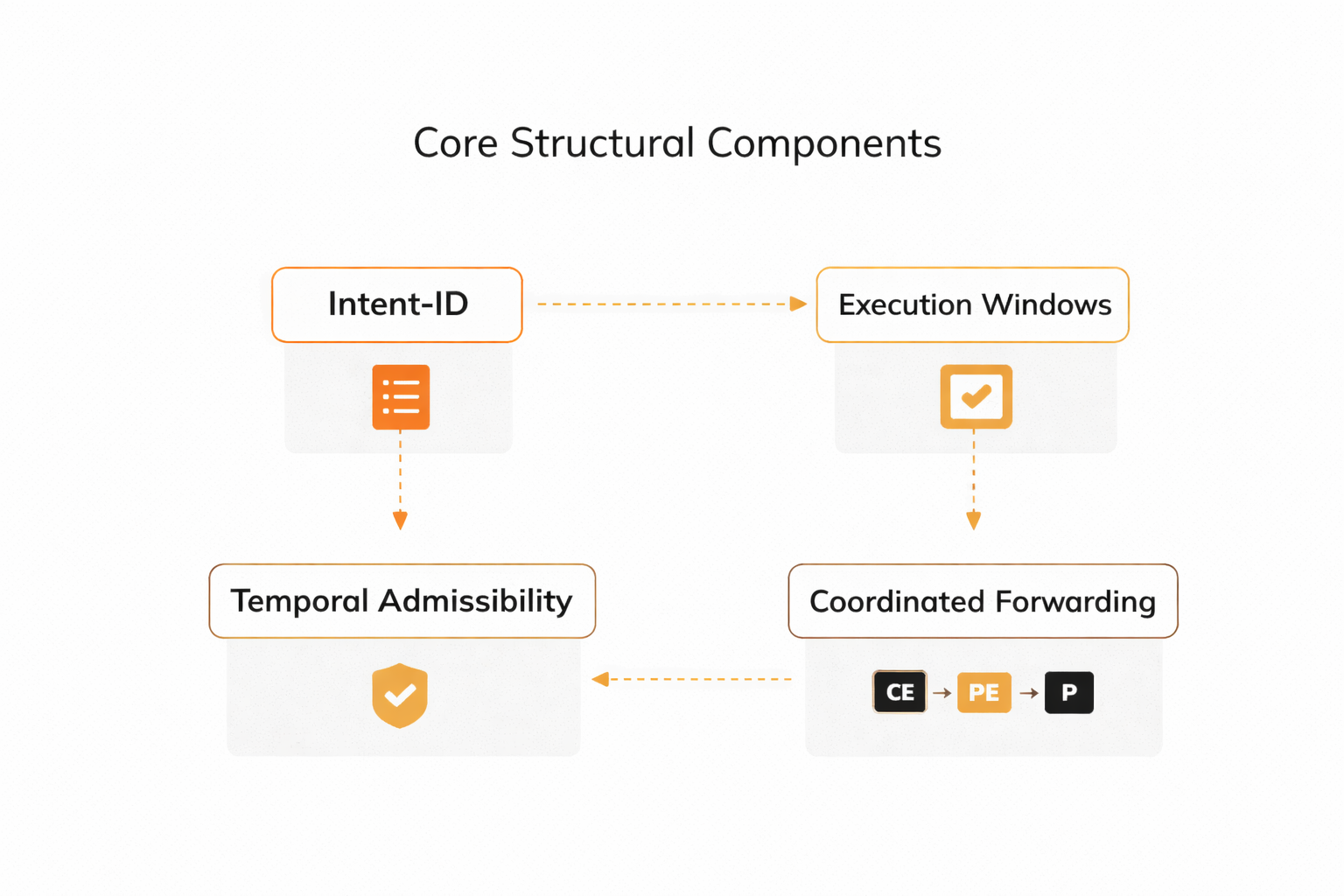
Core Structural Components
NGIS/IDT is built on a set of structural primitives that enable deterministic transport execution.
Intent-ID, execution windows, temporal admissibility, and coordinated forwarding together define the operational discipline that governs traffic activation across the network.
Execution Windows and Temporal Admissibility
Temporal admissibility ensures that forwarding resources remain aligned with declared execution constraints. Traffic is admitted only when the network can guarantee the conditions required for deterministic execution across the CE, PE, and P domains. By introducing temporal validation before activation, NGIS/IDT transforms transport from a reactive system into an execution-controlled infrastructure.